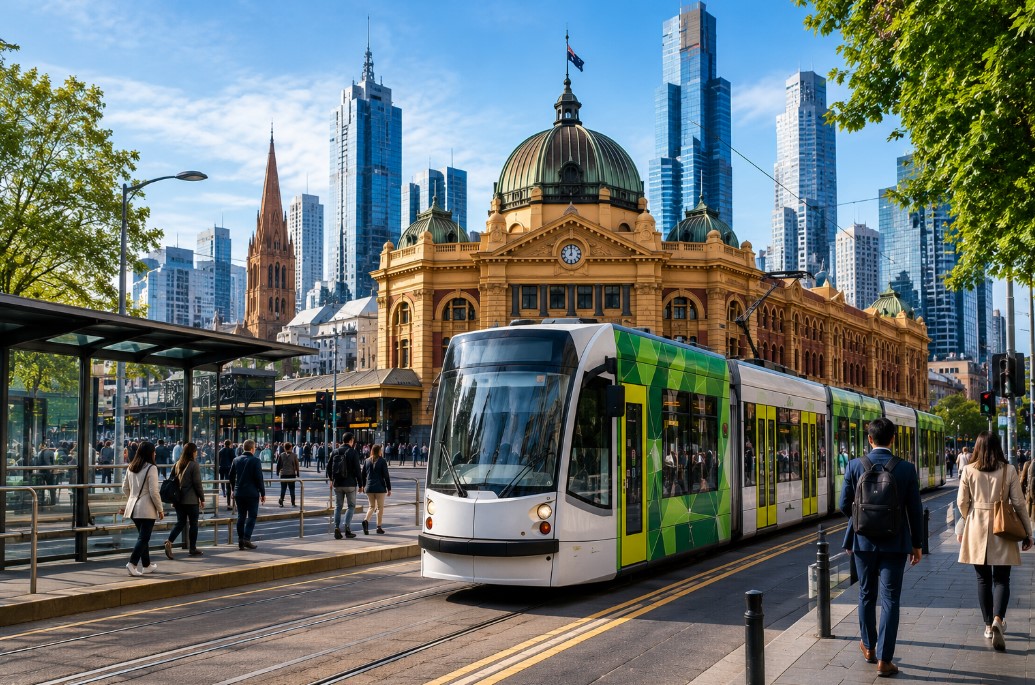
Melbourne is widely regarded as one of Australia's most accessible cities, thanks to its extensive and reliable public transport network. Whether you're visiting for business, a holiday, medical appointments, or an extended stay, using public transport is one of the easiest and most affordable ways to explore the city. With an integrated system of trains, trams, and buses, visitors can travel between major attractions, business districts, shopping precincts, and surrounding suburbs with ease.
Understanding how Melbourne's public transport system works before you arrive can help you save time, reduce travel costs, and make your stay more enjoyable.
One of Melbourne's greatest transport advantages is its iconic tram network. The city operates the largest tram system in the world, connecting the CBD with surrounding suburbs including Southbank, Docklands, Carlton, St Kilda, Richmond, and Port Melbourne. Trams are a convenient option for short trips, especially when travelling between shopping areas, restaurants, cultural attractions, and office precincts.
Visitors staying within Melbourne's city centre should also take advantage of the Free Tram Zone. This designated area covers much of the CBD, allowing passengers to travel between many of Melbourne's major landmarks without paying a fare. Popular destinations within the Free Tram Zone include Federation Square, Bourke Street Mall, Docklands, Queen Victoria Market, Parliament Station, and Flinders Street Station. For many visitors, this free service significantly reduces daily transport expenses.
For destinations beyond the CBD, Melbourne's train network offers fast and efficient travel throughout metropolitan Melbourne. Southern Cross Station and Flinders Street Station serve as major transport hubs, providing easy connections to suburbs, regional Victoria, and Melbourne Airport bus services. Trains are particularly useful for business travellers attending meetings outside the city centre or visitors exploring attractions further from the CBD.
Buses complement the tram and train networks by connecting areas that are not directly serviced by rail. Many routes provide convenient access to residential suburbs, hospitals, universities, shopping centres, and business parks, making buses a practical option for travellers staying outside central Melbourne.
To travel on Melbourne's public transport system, most visitors will need a myki card. The reusable smart card can be purchased at train stations, convenience stores, and selected retailers before loading travel credit. Once activated, passengers simply tap on and tap off for trains and buses, while tram users generally only need to tap on unless travelling entirely within the Free Tram Zone.
Choosing accommodation close to public transport can significantly improve your travel experience. Many serviced apartments in Melbourne are located within walking distance of tram stops, train stations, and major transport interchanges. This allows guests to commute efficiently to offices, conference venues, hospitals, universities, and popular attractions without relying on taxis or rental cars. Staying in well-connected areas such as Melbourne CBD, Southbank, Docklands, Carlton, or St Kilda provides both convenience and flexibility throughout your visit.
Business travellers particularly benefit from Melbourne's integrated transport system. Instead of allowing extra time for parking or dealing with city traffic, professionals can use trains and trams to arrive at meetings efficiently while remaining productive during the journey. Public transport also reduces travel expenses for companies managing employee accommodation and business travel budgets.
Visitors planning longer stays may also appreciate the environmental benefits of public transport. Using trains, trams, and buses helps reduce congestion and lowers carbon emissions compared to private vehicles. Melbourne continues to invest in sustainable transport infrastructure, making public transport an increasingly attractive option for both residents and visitors.
When planning daily travel, it is helpful to check service updates before leaving your accommodation. Major events, maintenance works, or weather conditions can occasionally affect schedules. Reliable journey planning helps avoid unexpected delays and allows travellers to choose the most efficient route.
For accurate route planning, service information, fare details, and live travel updates, visitors can use resources provided by Transport Victoria. The organisation offers journey planning tools, network maps, service alerts, and accessibility information that help travellers navigate Melbourne's public transport system with confidence. Whether planning a daily commute or exploring the city during free time, these resources make travelling around Melbourne much easier.
Comfort is another advantage of relying on public transport when staying in central Melbourne. Instead of searching for parking or navigating unfamiliar roads, visitors can simply board a tram or train and enjoy the journey. This allows more time to experience Melbourne's cafés, parks, laneways, museums, galleries, sporting events, and entertainment precincts without the stress of driving.
For visitors arriving from overseas, Melbourne's transport system is also relatively easy to understand. Station signage, route maps, digital displays, and onboard announcements provide clear information, while many journey planning apps offer real-time updates and estimated travel times. Spending a few minutes learning the system early in your trip can make the rest of your stay far more convenient.
Ultimately, Melbourne's public transport network is one of the city's greatest assets. Whether travelling for business, leisure, education, healthcare, or relocation, using trains, trams, and buses offers an affordable, reliable, and efficient way to experience everything the city has to offer. Combined with well-located serviced accommodation, convenient public transport helps visitors maximise their time, reduce travel costs, and enjoy a smoother, more enjoyable stay in one of Australia's most vibrant cities.