Are you expecting friends or family to stay in your guestroom soon? Or do you perhaps own a vacation rental and are seeking to make its amenities on par with any other five-star accommodation?
If you said yes to either question, you should know that it’s common courtesy to ensure the room is sanitary and comfortable for your future guest.
No one wants to stay in a stuffy room—especially if they’ve been travelling for hours to get there.
And while many elements can influence a room’s comfort level, today, we’ll focus on one key factor: temperature.
It may make guests uncomfortable when it’s too hot or too cold. And the last thing you want them to do is complain about the suboptimal living conditions of your property!
You want to ensure that your room’s temperature is pleasant enough to keep your guests happy from morning to night.
With that said, here’s a guide on maintaining the right indoor temperature for your rooms.
What’s the Ideal Indoor Temperature?
Regardless of outdoor weather conditions, the ideal indoor temperature for most people tends to rest somewhere between 68°F and 72°F (20°C to 22°C).
That said, if you live in a place with shifting seasons throughout the year, adjusting your home's thermostat or temperature system is usually suggested based on the outside weather.
If it’s winter outside, setting the thermostat to about 68°F (20°C) is a good temperature to remain energy efficient.
Conversely, if you’re facing a hot summer day, setting the thermostat to an indoor temperature of about 72°F (22°C) is good for both your guest’s comfort and your home’s electric bill.
By maintaining these temperatures, you can conserve energy while still ensuring a comfortable stay for your guests.
Some guests will always have their preferences, but for the most part, these temperatures are livable and can be enough for most people.
4 Types of Indoor Temperature Control Systems
When it comes to maintaining a comfortable indoor temperature, having a reliable temperature control system is crucial.
Nowadays, plenty of systems can promote pleasant temperatures indoors, no matter what the weather conditions are like outside.
Here are a couple of the most popular temperature control systems:
- Airconditioning unit
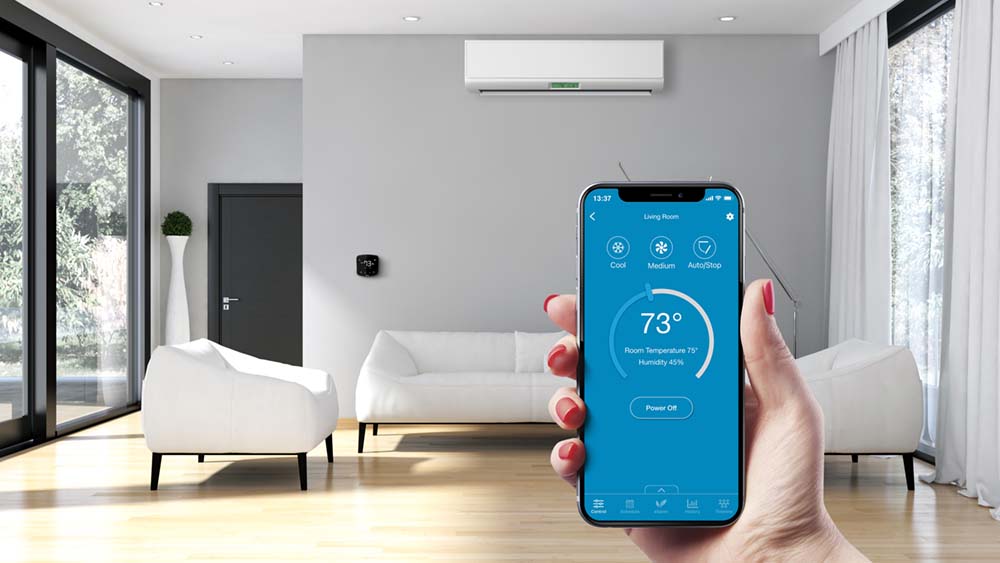
Regardless of your household furnishing and theme, A/C is something that most people can’t live without. These systems provide adjustable cooling that helps people withstand the heat of tropical climates or gruelling summer days.
These machines are also easy to set up, regardless of your home size. If you want to get an expert to install your system for you, you can also consider availing of air conditioning installation by Alliance Climate Control or other similar providers.
Several types of A/C units exist, from a ductless mini-split type to a central air conditioner. All of them work to cool the air of an enclosed space. Many modern AC units also come with extra filters and a dehumidifying feature, which can improve the overall air quality indoors.
- Gas-ducted heating
Particularly useful in colder climates, a gas-ducted heating system delivers heat throughout a property via a network of ducts. These series of pipes are installed far from normal view, typically on the roof or beneath the floorboards.
This machine provides emit heat that can warm the entire house from one central system. While it comes with a regulating controller, the switch also automatically turns off when your home is already at an ideal temperature.
- Furnaces
Typically powered by natural gas, propane, or electricity, furnaces are another popular structure that is frequently used to heat homes in colder climates.
Furnaces function through a process known as combustion, where fuel is ignited to generate heat. Once enough heat is generated, furnaces blow the heated air through ducts, delivering a constant flow of warm air to rooms through grills placed around the property.
- Evaporative Coolers
Effective in dry and hot climates, evaporative coolers work by converting hot air into a cool breeze using evaporation. They can add moisture to the air, which can be beneficial in dry environments.
They’re also fairly energy-efficient, which can help cut a fraction of your electricity bill.
3 Ways to Control Temperature Beyond the Thermostat
It’s common for A/C and heating units to degrade and become inefficient over time. The average lifespan of a standard temperature regulating unit tends to fall between 15 to 20 years—and while repairs can extend that lifespan, it’s never going to return to full capacity.
You don’t always have to rely on these units to keep your guests happy and cosy. In fact, even a fully functional temperature control system may not be enough to keep your room’s air temperature at satisfactory levels.
This could be attributed to a number of problems, from ventilation blockages to dirty filters.
If your A/C is running at the optimal temperature, but you’re still receiving complaints from your guests regarding the temperature, here are a few ways you can improve temperature levels in your vacation rental or guestroom.
- Insulation
Ensuring a comfortable temperature in your rental property all year round is crucial, and one way to achieve that is by installing the right insulating materials.
Whether it’s plastic, clay, or glass, insulation should be installed in all areas of your property, from your living room to the attic.
By building a home with insulation materials, you can reduce energy costs since your temperature system won’t need to operate too hard to keep the temperature at a comfortable level.
Besides preventing the unwanted entry of extreme outdoor temperatures, it’s also useful for eliminating noise pollution.
- Filters
You could have the most expensive, state-of-the-art cooling system, but it wouldn’t work to its maximum capacity if its filters were clogged by dust, dirt, and pollutants.
If you leave your filters uncleaned, this could affect the efficiency of your HVAC system, leading to uneven and uncomfortable temperatures.
To combat this, clean your filters regularly or replace them if they’re too worn out.
- Dehumidifier
Your A/C unit could be fully operational, but humid weather that seeps from the outside could still cause discomfort to people indoors.
Air from humid regions can become heavy and damp, making a room feel hotter than it actually is. To combat this, you can buy a dehumidifier to keep the moisture levels low.
This is especially helpful for guestrooms found in the lower areas of the house—as this area tends to be more humid than most.
By implementing these tips, you can ensure that you or your guests have a comfortable and enjoyable stay, making them more likely to choose your accommodations again in the future and recommend them to others.